
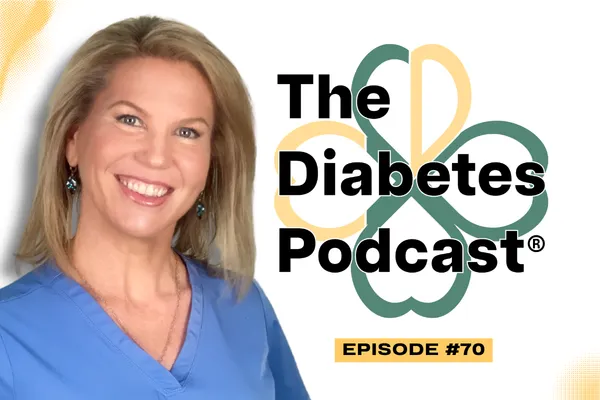
EP070: 23 Years of Diabetes Lessons Learned: What Actually Works
Shame does not heal. Your blood sugar numbers are just data, not a report card on your worth.
Welcome back to The Diabetes Podcast! We are so glad you are here. Today, we are talking about something very special. Amber has been a clinical dietitian and diabetes educator for over 23 years. That is a long time! Over the years, she has seen it all. She has seen what works, what does not work, and what causes the most pain for people living with diabetes.
In our latest episode, Richie sits down with Amber to uncover the biggest diabetes lessons she has learned. Richie is learning right alongside you, asking the questions we all want to know. Together, we want to share these lessons with you. Our goal is to cut through the noise, remove the shame, and give you real hope.
If you are feeling stuck, tired, or overwhelmed by your diabetes, take a deep breath. You are in the right place. Let's dive into the most important diabetes lessons from the past two decades.
Lesson 1: Shame Does Not Heal
This is the number one lesson Amber wants everyone to hear. Shame does not work. Guilt does not heal. For years, the medical world has sometimes made people feel bad about their blood sugar numbers. You might have been told that you are not trying hard enough. Or maybe you feel like a "bad report card" every time you visit the doctor.
Here is the truth: You are not failing.
Diabetes is a complex condition. It is not just about what you eat or how much you move. Stress, sleep, genetics, and hormones all play a huge part. When we feel shame, our stress levels go up. This actually makes blood sugar harder to manage! The first step to healing is to let go of the guilt. You are doing the best you can with the tools you have.
Lesson 2: Your Beta Cells Are Not Dead
One of the most exciting diabetes lessons we talk about is the truth about your pancreas. Inside your pancreas are tiny things called beta cells. They make insulin. For a long time, people were told that in type 2 diabetes, these cells just die off and never come back.
Science now shows us a different story. Your beta cells are often just "sleeping" or overwhelmed by too much fat in the liver and pancreas. They are tired, not dead! When we make gentle, sustainable changes to our lifestyle, we can wake those cells up. We can help them work better again. This is why remission is more possible than you have been told.
Lesson 3: Small Steps Beat Big Diets
Have you ever tried a strict diet, lost some weight, and then gained it all back? You are not alone. Fad diets are confusing and hard to stick to. One of the biggest diabetes lessons Amber has learned is that small, simple steps are much better than extreme diets.
Here are a few small steps that actually work:
Add, don't just subtract: Instead of focusing on what you cannot eat, focus on what you can add. Add more fiber, like beans and veggies, to your meals.
Move after meals: A simple 10-minute walk after eating can make a huge difference in your blood sugar.
Prioritize sleep: Getting good rest helps your body use insulin better the next day.
You do not need to change everything overnight. Pick one small thing and practice it until it feels easy.
Lesson 4: You Need a Roadmap, Not a Rulebook
Living with diabetes can feel like you are carrying a heavy rulebook. "Don't eat this. Don't do that." Rules make us feel trapped. What you really need is a roadmap. A roadmap gives you direction, but it allows you to take detours and go at your own pace.
If you are ready to start your journey, we have a free tool to help you. It is called the Remission Roadmap. It takes all these diabetes lessons and puts them into a simple, step-by-step guide. You can download it for free right now. Just visit https://roadmap.thediabetespodcast.com to get your copy. It is designed to help you lower your A1C and improve your insulin sensitivity without the stress.
Lesson 5: Hope is Stronger Than Fear
Fear is a common feeling when you are diagnosed with diabetes. You might fear complications, needles, or losing the foods you love. But over 23 years, Amber has seen that hope is a much stronger motivator than fear.
When you understand how your body works, the fear starts to fade. When you learn that your beta cells can wake up, you feel hopeful. When you realize that small steps matter, you feel empowered. Richie has learned this firsthand by talking with Amber every week. The more we learn, the less we fear.
How to Apply These Diabetes Lessons Today
So, what can you do today with these diabetes lessons?
Forgive yourself: Take a moment to let go of any guilt you are holding onto. Your worth is not tied to your blood sugar numbers.
Pick one small habit: Drink an extra glass of water, or add a handful of spinach to your dinner.
Keep learning: Education is your best tool. Keep listening, reading, and asking questions.
We believe in you. Managing diabetes is a journey, and you do not have to do it alone. We are here to help you every step of the way. Take courage! You can do this.
Disclaimer: The information in this blog post and podcast is for educational and informational purposes only. It is not medical advice, diagnosis, or treatment, and it does not replace a one-on-one relationship with your physician or qualified healthcare professional. Always talk with your doctor, pharmacist, or care team before starting, stopping, or changing any medication, supplement, exercise plan, or nutrition plan—especially if you have diabetes, prediabetes, heart, liver, or kidney conditions, or take prescription drugs like metformin or insulin. Results vary from person to person. Examples, statistics, or studies are shared to educate, not to promise outcomes. Any discussion of medications, dosing, or side effects is general in nature and may not be appropriate for your specific situation. Do not ignore professional medical advice or delay seeking it because of something you read or heard here. If you think you are experiencing an emergency or severe side effects (such as persistent vomiting, severe diarrhea, signs of dehydration, allergic reaction, or symptoms of lactic acidosis), call your local emergency number or seek urgent care right away. We strive for accuracy, but health information changes over time. We make no guarantees regarding completeness, timeliness, or suitability of the content and assume no liability for actions taken or not taken based on this material. Use of this content is at your own risk. Links or references to third-party resources are provided for convenience and do not constitute endorsement. By reading, listening, or using this information, you agree to these terms and understand that you are responsible for your own health decisions in partnership with your licensed healthcare provider.


