
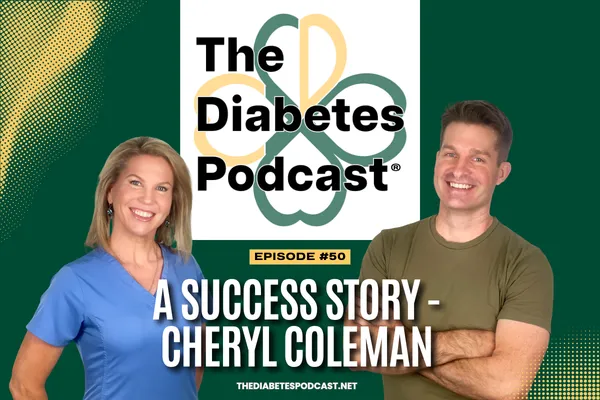
EP050: Cheryl Coleman's Diabetes Success Story
How Cheryl Lowered Her A1C and Took Back Her Life
“I felt fine—until my A1C came back at 18.”
This is a true story of hope. Cheryl Coleman is a mom, grandma, and lifelong caregiver from New Orleans. For almost 20 years, she lived with very high blood sugar and felt “fine.” Her A1C was once 18. She faced nerve pain, infections, vision loss, and even a stroke alert. But with the right tools, a stronger care team, and a mindset shift, she turned it around. Today, her A1C is 6.6. This is how she did it—and how you can start to lower A1C too.
Who Cheryl Is
Age: 64
Family: Three kids, five grandkids
Work: Behavioral health admin
Personality: Caregiver. Helper. Puts others first.
Food culture: New Orleans—flavor, comfort, and community
The Early Years: “I Felt Fine”
First clue: Rapid weight loss (139 pounds) without trying
A doctor friend checked her sugar. The meter read “HI” (over the limit)
Her A1C returned at 18
She didn’t feel sick, so it didn’t seem urgent
Started on metformin, but had constant diarrhea
Switched to Januvia later; A1C still stayed 11–12 for many years
What “Feeling Fine” Hid
Blood sugars in the 400s
Finger pricks hurt; she tested rarely
Didn’t know to prick on the sides of fingers (less painful)
Took insulin after meals because no one told her to dose before meals
Ate as usual; figured insulin would “fix it later”
Couldn’t get A1C under 9 for about 15 years
Complications Piled Up
Neuropathy in feet and hands (numbness, tingling, “10 pairs of socks” feeling)
Stepped on a used needle, didn’t feel it, and got a severe foot infection
Nine days in the hospital on IV antibiotics, then E. coli
Cataracts; surgeon refused to operate until A1C was under 9 (infection risk)
Unhealed leg wound that started as a blister
Diabetic retinopathy in the right eye (vision like fogged shower glass)
70% blockage in one leg and 90% in the other; later needed stents
High blood pressure; experienced a stroke alert with dizziness and speech issues
The Line in the Sand
Losing vision made it real. She needed her eyes for work and hobbies.
Hospital “stroke alert” shook her. Caught early with no lasting deficits.
Realization: “If I don’t take care of me, I won’t be here to care for anyone.”
The Tools That Helped Lower A1C
Referral to endocrinology (after many years)
Insulin pump (Tandem), approved after her endo “wrote it right” for insurance
Consistent insulin delivery and smarter dosing
Learning better timing: take rapid insulin before meals (usually 15–30 minutes)
Result: A1C dropped to 6.6 within about a year on the pump
Why Pre-Meal Insulin Timing Matters
Taking insulin after you eat is like chasing the past
Pre-meal dosing helps keep blood sugar from spiking
For many people, this alone helps lower A1C
Healing After Blood Flow Returned
Stents restored circulation
The chronic leg wound healed in two weeks with better blood flow and better glucose
When sugar is high and blood flow is low, wounds can’t heal well
Lower A1C supports healing from the inside out
Mindset Shifts That Changed Everything
Self-care is not selfish—it’s survival
“Ask for help.” People can’t read your mind
Put your own name first on your “important people” list
Listen to your body’s early whispers, not just the screams
If you’re a caregiver, remember: you can’t pour from an empty cup
What Cheryl Does Differently Now
Uses an insulin pump every day
Watches signs from her body and acts sooner
Calls her daughter (a nurse) as a sounding board
Chooses rest and simple meals when needed
Lets go of guilt and shame; focuses on progress
Practical Tips to Lower A1C (What Cheryl’s Story Teaches)
Learn timing: Take rapid insulin 15–30 minutes before meals if prescribed
Fingersticks: Use the side of your fingers to reduce pain
Track patterns: Even simple notes help you see what foods spike you
Don’t chase highs: Prevent with timing instead of only correcting after
Ask for tools: Pumps and CGMs can change your life
Advocate: If insurance says no, ask your doctor to try again with stronger notes
Watch wounds: Seek care early; poor healing can mean poor blood flow
Eyes matter: Keep eye exams; ask about retinopathy treatment early
Blood pressure: Treat it—it ties directly to stroke risk
Don’t go it alone: Call your clinic, a diabetes educator, or a trusted person
Common Barriers Cheryl Faced (Maybe You Do Too)
“I feel fine.” High sugar can be silent for years
“Fingersticks hurt.” Try the side of the finger
“Insurance said no.” Ask your endo to resubmit or appeal
“Food is my joy.” Keep the flavor; adjust portions and timing
“I don’t want to be a bother.” Ask for help anyway
What to Tell Your Care Team
“I struggle with pre-meal timing—can you help me set a routine?”
“Fingersticks hurt—can you show me best technique or discuss a CGM?”
“My numbers spike after dinner—can we adjust my insulin or plan?”
“I want to lower A1C to reduce my risk—what’s my next best step?”
“Can we document medical need for a pump/CGM for insurance?”
Cheryl’s Results
A1C: from 18 down to 6.6
Wound: healed after stents and better glucose
Stroke alert: treated fast, no lasting deficits
Vision: still working with her eye team, and now protecting the vision she has
Life: More peace, more awareness, more future
Cheryl’s Message to You
Put your name first on your “important people” list
Self-care is essential, not selfish
Listen when your body whispers
Ask for help—today
You can lower A1C. You can heal. You can change at any age
Call to Action
If Cheryl’s story gave you hope, share it with someone who needs it. If you’re ready to lower A1C, start with one step today:
Set a reminder to take insulin before meals (if prescribed)
Ask your doctor about a CGM or pump
Book your eye exam
Tell someone you trust that you want help
Need support? Contact us [email protected]. Take courage! You can do this, and we can help.
Disclaimer
The information in this blog post and podcast is for educational and informational purposes only. It is not medical advice, diagnosis, or treatment, and it does not replace a one-on-one relationship with your physician or qualified healthcare professional. Always talk with your doctor, pharmacist, or care team before starting, stopping, or changing any medication, supplement, exercise plan, or nutrition plan—especially if you have diabetes, prediabetes, heart, liver, or kidney conditions, or take prescription drugs like metformin or insulin.
Results vary from person to person. Examples, statistics, or studies are shared to educate, not to promise outcomes. Any discussion of medications, dosing, or side effects is general in nature and may not be appropriate for your specific situation. Do not ignore professional medical advice or delay seeking it because of something you read or heard here. If you think you are experiencing an emergency or severe side effects (such as persistent vomiting, severe diarrhea, signs of dehydration, allergic reaction, or symptoms of lactic acidosis), call your local emergency number or seek urgent care right away.
We strive for accuracy, but health information changes over time. We make no guarantees regarding completeness, timeliness, or suitability of the content and assume no liability for actions taken or not taken based on this material. Use of this content is at your own risk.
Links or references to third-party resources are provided for convenience and do not constitute endorsement. By reading, listening, or using this information, you agree to these terms and understand that you are responsible for your own health decisions in partnership with your licensed healthcare provider.


