
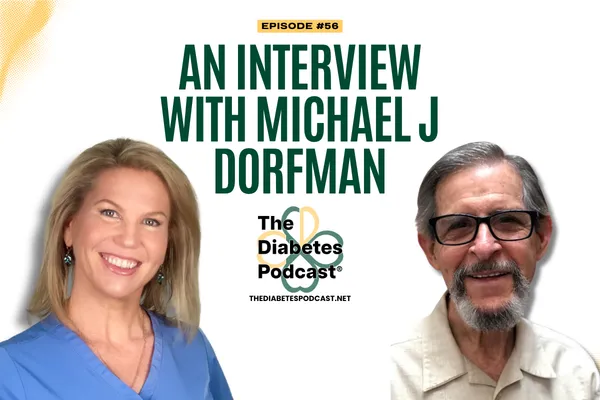
EP056: An Interview with Michael J Dorfman
Longevity Made Simple: Michael J Dorfman on Food, Habits, and Thriving With Diabetes
Beatrice was given six months. After switching to a plant-powered plan, she lived almost ten years.
Welcome to The Diabetes Podcast. We sat down with author and longevity coach Michael J Dorfman. Michael went vegetarian in 1976, then moved to a whole‑food, plant‑powered way of eating about 17–18 years ago. Now in his 80s, he plays competitive pickleball and helps people reframe aging. This post brings you the best lessons from our talk—in simple, practical steps you can use today.
Why Michael Changed: From Dairy Roadblocks to Plant‑Powered Longevity
Michael grew up in a meat‑heavy home. His dad and brother were butchers.
He became vegetarian in 1976 for spiritual reasons, not health.
He still got sick a couple times a year. His vegan brother suggested cutting dairy.
The China Study by T. Colin Campbell helped him try a plant‑powered shift.
After he dropped dairy and animal foods, the yearly “flu‑like” bouts stopped.
His takeaway: small food changes can unlock big health wins—especially for longevity.
A Heart Story That Sparked a Mission
Michael shared a powerful story about his friend Beatrice:
She had a major heart attack and a quadruple bypass.
A year later, a narrowed graft meant stenting wasn’t possible.
Doctors sent her home with activity limits. Family was told she had about six months.
Michael gave her Dr. Caldwell Esselstyn’s book, Prevent and Reverse Heart Disease.
She adopted a strict plant‑powered plan—and lived almost 10 more years.
That experience pushed Michael to teach food as a lever for health and healthy aging.
Diabetes Basics in Plain Words
Many people blame “sugar” alone. Michael explained it like this:
The body struggles when fat builds up inside muscle and liver cells.
That fat can block insulin from doing its job.
When people lose weight and lower that fat, blood sugars can improve.
Many diets can help short term, but Michael backs plant‑powered eating for long‑term longevity.
Our take: for type 2 and prediabetes, focus on lowering internal fat, building muscle, and eating foods that help insulin work better.
Why Fiber Is a Big Deal for Longevity
Protein matters, but most people already get enough. Fiber is the missing piece.
Fiber feeds your gut bugs (the microbiome).
A happy gut helps lower inflammation.
Only plants have fiber. Whole plants give you fiber plus vitamins and minerals.
Aim to add plants first. Let “add” lead before “avoid.”
Easy ways to add fiber:
Oats, beans, lentils
Berries, apples, oranges
Broccoli, greens, carrots
Nuts and seeds
Whole grains like quinoa, brown rice, farro
Dairy, Cheese, and Cravings—What Helped
Michael struggled to give up cheese too. Two ideas helped him:
The Cheese Trap by Dr. Neal Barnard explains why cheese can feel addictive (fat, salt, and milk proteins that can drive cravings).
Give your taste buds time. About two weeks without a super‑salty or super‑fatty food can “reset” how things taste.
Plant‑powered swaps Michael and our team use:
Tofu “cream cheese” or cashew cheese
Nutritional yeast for a “cheesy” note
Hummus or white‑bean spreads on sandwiches
Hearty umami: roasted mushrooms, miso, olives, sun‑dried tomatoes
Tip: keep trying a new version every few days. Palates change with practice.
Blue Zones and the Longevity Mindset
Dan Buettner’s Blue Zones found people who live long, healthy lives in places like Okinawa, Sardinia, Ikaria, Loma Linda, and Nicoya. Common threads:
Mostly plant‑powered eating
Natural daily movement
Strong community and family ties
Purpose (a reason to get up each day)
Lower chronic stress
Michael loves “plant‑powered” because it welcomes progress. You don’t need to be perfect to improve your health or your longevity.
Simple Food Updates for Type 2 and Prediabetes
Start small and stack wins:
Make the starch smarter: swap white rice for brown rice or quinoa a few times a week.
Add a bean: scoop of black beans or lentils into bowls, soups, and salads.
Color rule: add two colors at each meal (like broccoli + red peppers).
Meatless Monday (then add a second day): try chili, veggie tacos, or stir‑fry.
Plate picture: half veggies and fruit, one‑quarter beans or tofu/tempeh/seitan, one‑quarter whole grains.
Sweet treat swap: fruit first. Add a handful of nuts to blunt a sugar spike.
Movement You’ll Actually Do
You don’t need a gym to boost longevity:
Move every 20–30 minutes: stand, walk the hall, stretch.
Aim for daily steps plus two short strength sessions a week (push, pull, squat, hinge).
Try something fun: pickleball, dancing, swimming, yard work, or biking.
Recovery matters: plant‑powered eating may lower inflammation, which can help you bounce back faster.
Identity Over Willpower: “This Decade Counts”
Michael shifted his identity: not just “I want to live to 100,” but “I thrive in my 80s.” That mindset changes choices:
Pick small actions you can repeat.
Let habits grow over time.
Track streaks and celebrate tiny wins.
Choose challenge over comfort. It keeps your brain and body young.
Stress, Sleep, and Community
Longevity is not only food:
Sleep: protect a regular bedtime and wake time.
Stress: add daily calm—breathing, prayer, nature, or a quiet walk.
People: join a group, volunteer, or play a social sport. We are wired for connection.
Purpose: ask, “What am I building this year?” Purpose pulls you forward.
For Families and the Next Generation
Chronic disease builds over years. Starting early helps.
Make food skills normal: cook together, pack fruit, keep beans and grains ready.
Be a “discerning sponge”: learn from many sources and notice who profits from what they sell.
Whole foods first; supplements are not a swap for real food.
A Note on Other Diets
Low‑carb, or keto can show short‑term changes. Michael’s lens is longevity:
Focus on long‑term patterns that lower internal fat, reduce inflammation, and support your gut.
For most people, that means more whole, plant foods and fewer ultra‑processed foods.
Quick Start: 7‑Day Plant‑Powered Boost
Day 1: Meatless Monday chili with beans and brown rice
Day 2: Add a fruit at breakfast and a salad at lunch
Day 3: Swap white bread/pasta for whole grain
Day 4: Try tofu, tempeh, or seitan in a stir‑fry
Day 5: Two colors at dinner (pick any veggies)
Day 6: Walk after two meals (10–15 minutes)
Day 7: Batch‑cook beans and grains for next week
About Michael J Dorfman and Where to Learn More
Books by Michael J Dorfman:
The Longevity Wellness Revolution
The Thriving Vegan
Learn more and get his free guidebook and coaching info:
Our Closing Thought
You don’t have to be perfect. You just have to start. Add one plant. Take one short walk. Go again tomorrow. That’s how longevity is built—simple steps, done often.
Need additional help putting it all together? Email us at [email protected].
Take courage! You can do this, and we can help.
Disclaimer
The information in this blog post and podcast is for educational and informational purposes only. It is not medical advice, diagnosis, or treatment, and it does not replace a one-on-one relationship with your physician or qualified healthcare professional. Always talk with your doctor, pharmacist, or care team before starting, stopping, or changing any medication, supplement, exercise plan, or nutrition plan—especially if you have diabetes, prediabetes, heart, liver, or kidney conditions, or take prescription drugs like metformin or insulin.
Results vary from person to person. Examples, statistics, or studies are shared to educate, not to promise outcomes. Any discussion of medications, dosing, or side effects is general in nature and may not be appropriate for your specific situation. Do not ignore professional medical advice or delay seeking it because of something you read or heard here. If you think you are experiencing an emergency or severe side effects (such as persistent vomiting, severe diarrhea, signs of dehydration, allergic reaction, or symptoms of lactic acidosis), call your local emergency number or seek urgent care right away.
We strive for accuracy, but health information changes over time. We make no guarantees regarding completeness, timeliness, or suitability of the content and assume no liability for actions taken or not taken based on this material. Use of this content is at your own risk.
Links or references to third-party resources are provided for convenience and do not constitute endorsement. By reading, listening, or using this information, you agree to these terms and understand that you are responsible for your own health decisions in partnership with your licensed healthcare provider.


