
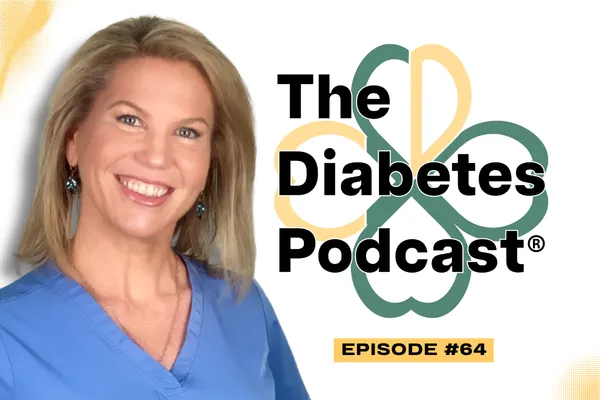
EP064: How to Age Well with Type 2 Diabetes: A Guide to Geriatrics and Healthspan
"Mother Nature wants to kill us off, and that's okay. But we don't need to decline and die... I'm gonna slam into the wall. I do not wanna ease into death."
When you are diagnosed with Type 2 diabetes, it is easy to feel like your best years are behind you. You might hear people say, "Well, this is just my life now." But what if that isn't true? What if you could fight back, protect your brain, and live a long, independent life?
In our latest episode ofThe Diabetes Podcast®, we sat down with Dr. Golnosh Sharafsaleh. She is a doctor who specializes in geriatrics (the care of older adults) and lifestyle medicine. She shared some incredible insights on how to take control of your health as you age.
Remember: It's not your fault, but it can be your fight!
The Link Between Diabetes and Your Brain
Did you know that Type 2 diabetes increases your risk of dementia? When we think about diabetes, we usually think about blood sugar. But our bodies are connected.
Dr. Golnosh explained that there are 15 risk factors for dementia. Many of them are tied to diabetes, including:
High blood pressure
High LDL cholesterol
Hearing loss
Vision loss
Sleep apnea
The good news? You can manage these risks! By taking small steps to improve your lifestyle, you can protect your brain and your independence.
The H.E.A.L.T.H. Framework
Dr. Golnosh uses the HEALTH framework to help her patients thrive. Here is what it stands for:
Habits: What are your daily routines? If you drift off track, how do you reset?
Energy: Understanding how your cells use energy and how diseases affect your body.
Activity: This doesn't mean running a marathon. It means moving enough to stay independent and do what you love.
Lifestyle: Focusing on sleep, nutrition, and social connections.
Transformation: Adapting to changes in your body without feeling guilty.
Healthspan: Focusing on thequalityof your years, not just the number of years you live.
Why "Sick Care" is Failing Us
One of the biggest frustrations we hear from our listeners is that doctors don't spend enough time with them. Dr. Golnosh agrees. The traditional healthcare system is built on "sick care." They wait until you are very ill to treat you, rather than helping you stay well.
In geriatrics, the goal is prevention. Dr. Golnosh shared a story of a patient who weighed 305 pounds, had severe knee pain, and was on insulin. Instead of just giving him more pills, she spent hours teaching him how to read food labels and cook simple meals. Over two years, he lost 65 pounds, got off his blood pressure medicine, and even got a dog to walk with!
This proves that with the right support, you can make amazing changes at any age.
A Word for Caregivers
If you are caring for a loved one with diabetes or dementia, you are a hero. But you are also at risk of burnout. Dr. Golnosh noted that caregivers often neglect their own health.
If you are a caregiver, please remember:
You cannot do it alone. Build a circle of support with friends, family, or your church.
Look into Geriatric Care Navigators. These professionals can help you find resources to keep your loved one safe at home.
Give yourself grace. Extend the same compassion to yourself that you give to your loved one.
Take Courage!
Aging with Type 2 diabetes doesn't mean you have to slowly decline. As Dr. Golnosh says, we don't have to "ease into death." We can live vibrant, active lives right up to the end.
You can find out more about Dr. Sharafsaleh's work with geriatrics at https://www.geriacademy.com .
If you need additional help and support, reach out to us at [email protected].
Take courage! You can do this, and we can help.
Disclaimer: The information in this blog post and podcast is for educational and informational purposes only. It is not medical advice, diagnosis, or treatment, and it does not replace a one-on-one relationship with your physician or qualified healthcare professional. Always talk with your doctor, pharmacist, or care team before starting, stopping, or changing any medication, supplement, exercise plan, or nutrition plan—especially if you have diabetes, prediabetes, heart, liver, or kidney conditions, or take prescription drugs like metformin or insulin. Results vary from person to person. Examples, statistics, or studies are shared to educate, not to promise outcomes. Any discussion of medications, dosing, or side effects is general in nature and may not be appropriate for your specific situation. Do not ignore professional medical advice or delay seeking it because of something you read or heard here. If you think you are experiencing an emergency or severe side effects (such as persistent vomiting, severe diarrhea, signs of dehydration, allergic reaction, or symptoms of lactic acidosis), call your local emergency number or seek urgent care right away. We strive for accuracy, but health information changes over time. We make no guarantees regarding completeness, timeliness, or suitability of the content and assume no liability for actions taken or not taken based on this material. Use of this content is at your own risk. Links or references to third-party resources are provided for convenience and do not constitute endorsement. By reading, listening, or using this information, you agree to these terms and understand that you are responsible for your own health decisions in partnership with your licensed healthcare provider.


